Lens Structure Explained: Components, Classic Optical Designs, and Modern Technologies
This article will break down the components of a camera lens, explain their roles in image formation, and introduce the classic optical structures that still influence modern lens design today.
Lens Construction
What Are Lens Elements?
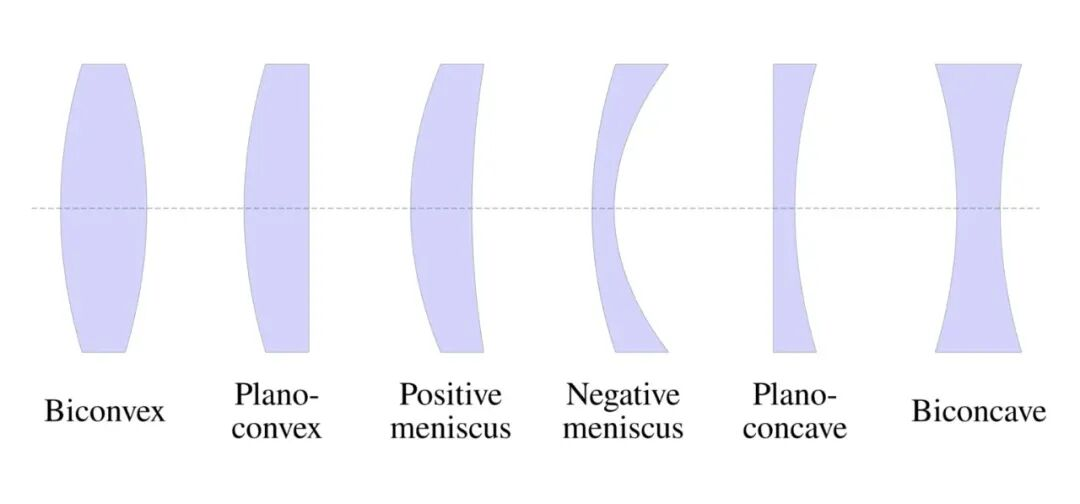
The basic building block of a lens is a set of specially shaped glass components—lens elements. These elements can be convex (bulging outward), concave (curving inward), or feature complex curved surfaces such as aspherical lenses.
Lens elements refract light precisely to focus it onto the image sensor or film. Light does not travel in a straight line inside the lens; it undergoes multiple refractions to correct aberrations, improve sharpness, and reduce distortion.
What Are Lens Groups?
Lens elements are combined into groups—units where multiple elements work together. These assemblies can be cemented together with optical adhesive (known as a cemented group) or separated by air gaps.
Lens groups typically move as a single unit during focusing or zooming.
Take the Leica M-APO-Summicron 50mm f/2 ASPH as an example: the vertical line in the middle represents the aperture. There are 3 elements in front of the aperture and 5 behind it. The two rear elements form one group, the two in front of them form a second group, the two negative meniscus elements near the front form a third group, and the remaining two elements are individual groups. This results in a 5-group, 8-element lens design.
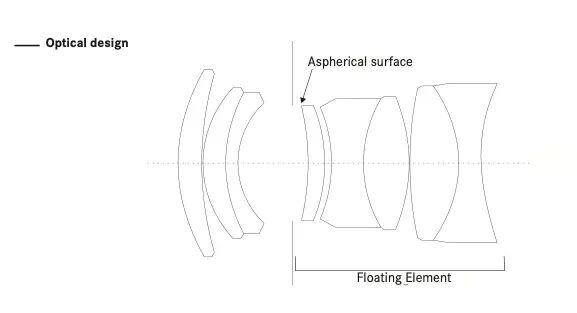
The design of lens groups directly affects a lens’s complexity, weight, cost, and performance. More groups may indicate advanced optical engineering, but do not always guarantee better image quality—it all comes down to the designer’s trade-offs.
Coatings: The Invisible Guardians of Image Quality
Lens coatings, or dielectric coatings, are ultra-thin layers applied to lens surfaces. They reduce internal reflections, minimize flare and ghosting, and enhance image contrast and color reproduction.
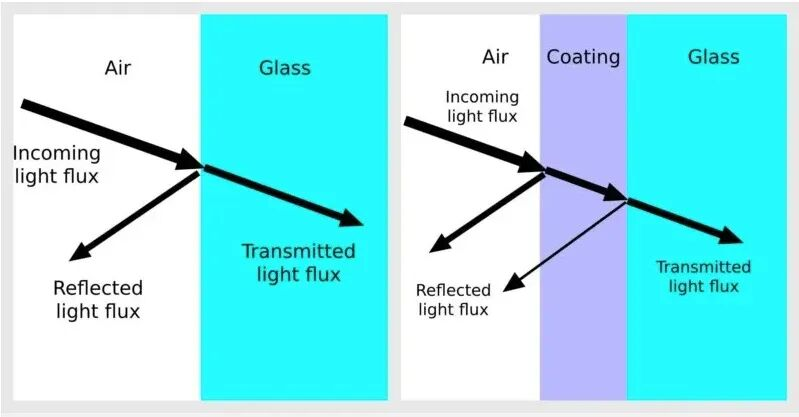
Coatings maximize light transmission, bringing the actual light transmission value (T-stop) closer to the theoretical aperture (f-stop).
Evolution of Lens Coatings
· 1935: Alexander Smakula of Carl Zeiss invented the vacuum-coated magnesium fluoride process.
· 1941: The Kodak Ektra became the first camera with an anti-reflection coated lens.
· 1956: Minolta released the first consumer-grade multi-coated lens.
· After the 1970s: Multi-coating became the industry standard.
The left image shows an uncoated Zeiss ZE 21mm f/2.8 Distagon lens; the right shows the same model with Zeiss T* coating.
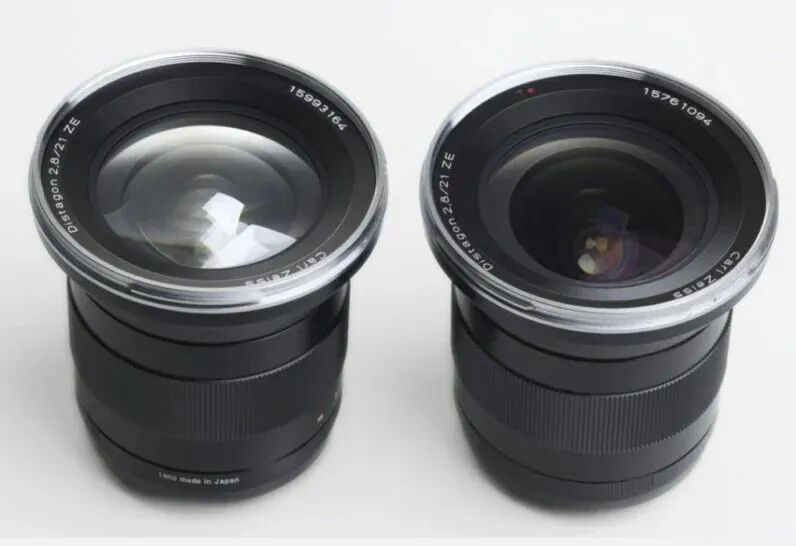
Today, almost all modern lenses feature multi-layer coatings, except for a few special-purpose lenses—such as some cinema lenses—that intentionally omit coatings for a specific stylistic effect.
Functions of Coatings:
· Improve contrast in backlit conditions
· Control chromatic aberration for more accurate colors
· Reduce light loss and brighten the image
· Provide water, oil, and dust resistance (e.g., fluorine coatings)
Classic Optical Structures
Although modern lenses widely use computer software for simulation and design, resulting in more complex and diverse structures, many basic designs still originate from classic inventions between the 19th and early 20th centuries. Below are several representative structures.
Achromatic Doublet
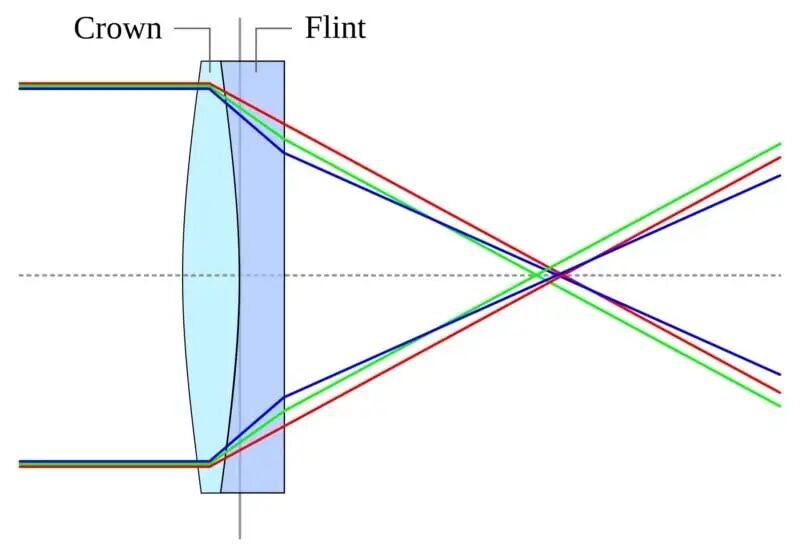
This was one of the earliest breakthroughs in optical design. It consists of two lenses made from different types of glass—typically crown glass and flint glass.
Chromatic aberration occurs when different wavelengths of light focus at different points, causing color fringing at edges. The innovation of the achromatic doublet is that it bends different wavelengths together, effectively reducing the rainbow-like artifacts common in early lenses. Even today, many internal lens groups rely on this principle.
Cooke Triplet
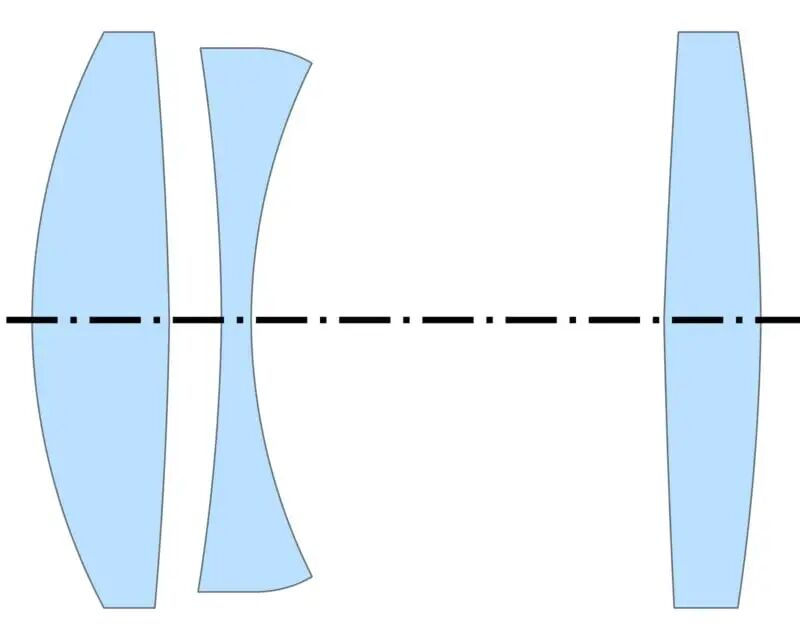
Invented by Dennis Taylor in 1893, the Cooke Triplet adds a third element to the doublet design. It features a positive element (biconvex lens) at the front, a negative element (biconcave lens) in the center, and another positive element (biconvex lens) at the rear.
This design greatly improves the correction of spherical and chromatic aberrations.
The Cooke Triplet is a major milestone in lens design history. It was the first design to fully correct all five Seidel aberrations: spherical aberration, coma, astigmatism, Petzval field curvature, and distortion.
It is widely regarded as the foundation of modern photographic optics. Many lenses, from vintage compact cameras to modern designs, have evolved from this structure due to its simplicity and excellent image quality at moderate apertures.
Tessar
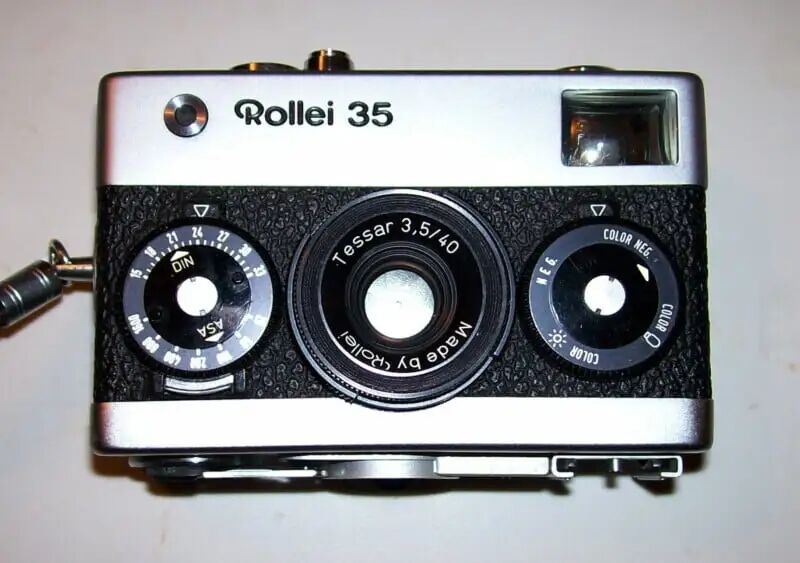
Designed by Paul Rudolph for Carl Zeiss in 1902, the Tessar is one of the most legendary optical structures in photography history.
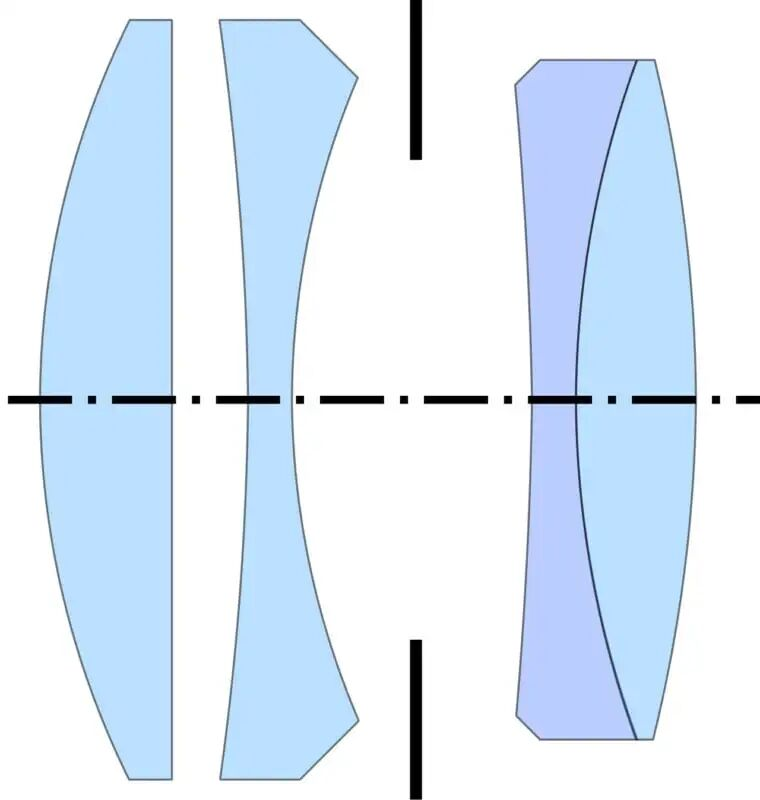
It mainly uses a 3-group, 4-element layout: a positive crown glass element at the front, a negative flint glass element in the center, and a rear group made of a cemented negative flint glass element and positive crown glass element.
The Tessar’s greatest strength is sharp, clear imaging with high contrast. It uses relatively few elements and works well in lenses with apertures up to f/2.8 (though faster versions exist).
Almost all 35mm film cameras with prime lenses and a compact design in the 20th century—such as the Rollei 35 and Olympus μ Series—used lenses based on the Tessar or its derivatives.
Double Gauss / Planar Structure
One of the most influential and long-lasting optical designs is the Double Gauss, which originated from a telescope design by Carl Friedrich Gauss in 1817. Later, Carl Zeiss developed it for photographic use under the name Planar.
A Double Gauss design usually has 6–7 elements arranged symmetrically, with a pair of positive meniscus lenses surrounding a central negative group.
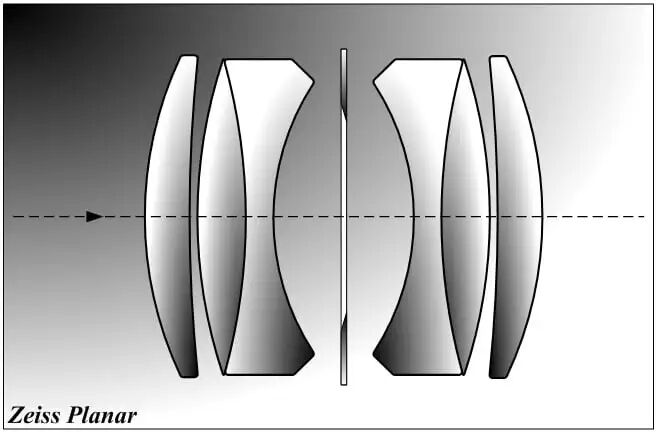
Its biggest advantage is the ability to achieve large apertures while effectively reducing spherical aberration, field curvature, and distortion.For this reason, it became the basis for many classic 50mm fast prime lenses.
Sonnar Structure
The Sonnar was another innovation by Carl Zeiss in the 1930s. It minimizes air-to-glass surfaces, resulting in fewer reflections and higher image contrast. A classic Sonnar usually has 3 groups with 5–7 elements, with large rear elements placed close to the film or sensor.
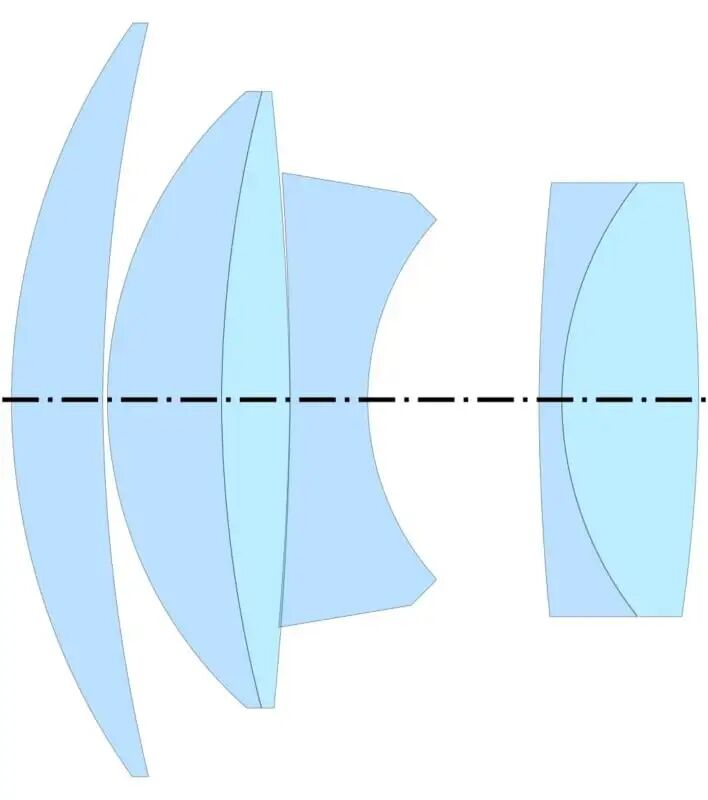
Compared to the Tessar, the Sonnar achieves larger apertures more easily; compared to the Double Gauss, it is more compact. This makes it ideal for rangefinder lenses. With high contrast and unique bokeh, it remains popular for portrait and street photography lenses.
Retrofocus / Inverted Telephoto
With the rise of SLR cameras, a new challenge emerged: the mirror box required more space behind the lens. Traditional wide-angle designs could not maintain enough distance from the film, so engineers developed the Retrofocus structure.
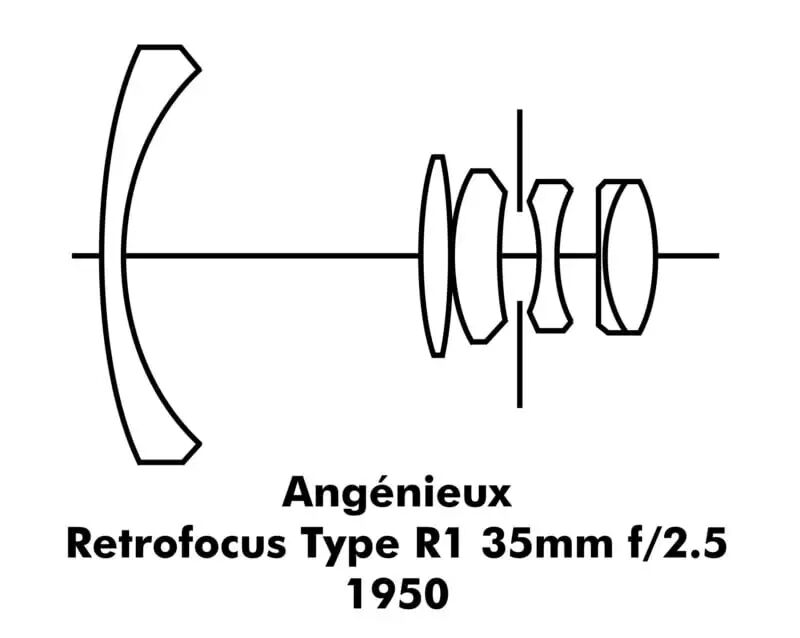
A telephoto lens consists of a positive front group and a negative rear group, magnifying the image while shortening the back focal length to less than the focal length.
The Retrofocus design does the opposite: it uses one or more negative groups at the front to increase the back focal length beyond the focal length. This allows internal components (such as the SLR mirror) to fit behind the lens while maintaining a wide angle of view.
Modern Lens Design Elements
Advances in optics, electronics, and manufacturing have introduced more sophisticated technologies into modern lenses.
Aspherical Elements
Traditional lens elements have spherical surfaces—part of a perfect sphere. While easy to manufacture, spherical elements produce spherical aberration, especially at large apertures, requiring additional elements for correction.
An aspherical lens has a surface curvature that changes from center to edge. This allows a single aspherical element to correct spherical aberration, astigmatism, and other distortions that would otherwise require multiple spherical elements.
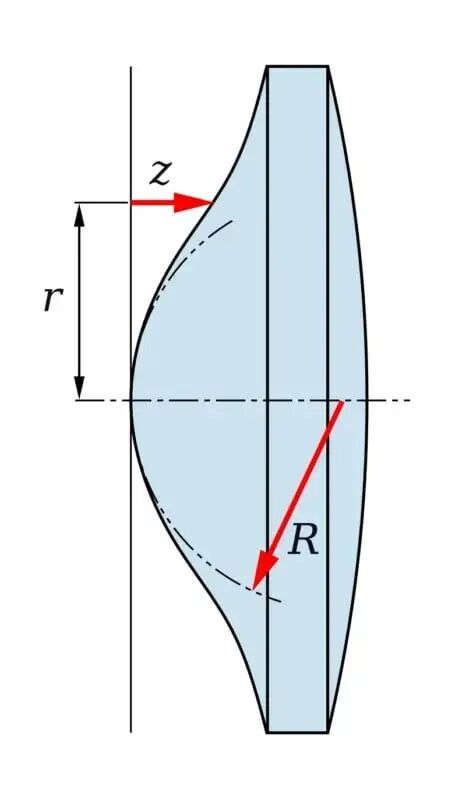
Using aspherical elements reduces the total number of elements, making lenses smaller and, in some ways, more cost-effective.
Once limited to high-end and specialized lenses due to high manufacturing costs, aspherical elements are now commonly found even in entry-level lenses.
Internal / Rear Focusing
Older lenses often moved the entire optical system to focus. Modern lenses widely use internal focusing (IF) or rear focusing (RF) systems, where only internal or rear elements move during focusing.
Benefits include:
· Faster autofocus
· Better dust and water resistance
· More consistent performance with filters
Floating Elements
Most lenses are optimized for a specific working distance. When focusing at close range, however, field curvature and other aberrations may degrade image quality as elements move.
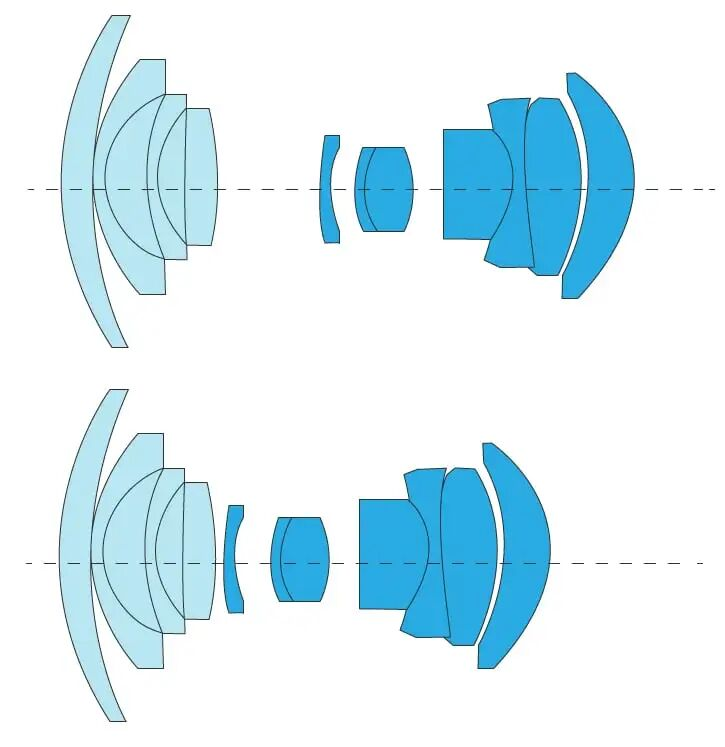
To solve this, many high-end lenses use floating elements—small groups that move independently from the main focusing group. They maintain precise spacing and alignment across all focusing distances, ensuring consistent image quality throughout the focus range.
The practical result: minimal image quality loss even during close-up shooting.
How Lens Technologies Affect Performance
· Aspherical Elements: Reduce aberrations and distortion, control lens size
· Special Glass (ED/UD): Minimize chromatic aberration, enhance detail
· Floating Elements: Improve image quality at close focus
· Internal / Rear Focusing: Faster focusing, better weather sealing
· Coatings: Increase contrast, reduce flare and ghosting
· APO Apochromatic Technology: Superior chromatic aberration control and sharpness
 Consult now